
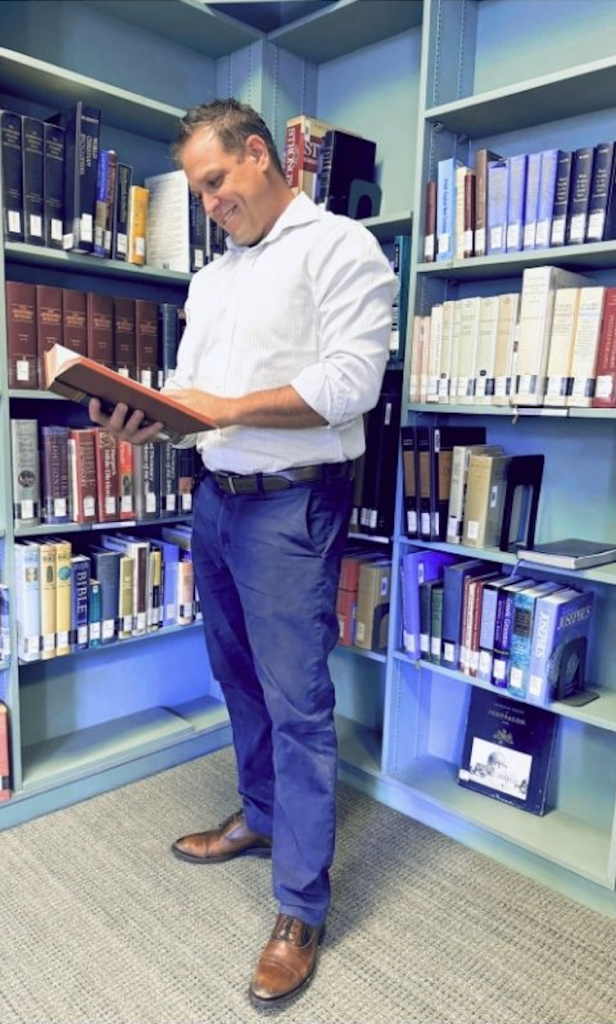
Matthew Smith
Academic Performance Coach
I understand what it feels like to be a student with a full life.
As a middle and high school student, I balanced academics with Tae Kwon Do, volleyball, Jiu-Jitsu, and wrestling. Eventually, I learned the difficult lesson that being good at many things doesn’t mean you can do everything. Sometimes, you have to choose.
Years later, I saw the same challenge from the other side, as a teacher and coach.
As the head middle school boys’ volleyball coach in Shenzhen, China, I worked with student-athletes whose days were already packed with school, practice, tournaments, and travel. At Saint Andrew’s School and later at The Greene School in West Palm Beach, I had the same experience: I saw bright, motivated students struggling because they hadn’t learned how to manage everything they were involved with.
They weren’t lazy. They weren’t lacking ability. They were overwhelmed.
They didn’t know how to prioritize, make the most of a short study window, organize their work, or study efficiently. And when school began to suffer, something else often suffered too: a missed practice, a competition they couldn’t fully prepare for, or an activity they had to step away from.
That experience became central to how I work with students today.
I’ve also had to learn these skills in my own life. During my first master’s program, I was newly married while balancing volunteer work, an internship, paid employment, and graduate studies—and still graduated with a 4.0 GPA. Later, as a new father, I was balancing two jobs with another master’s program and the responsibilities of family life. I again graduated with a 4.0 GPA and was inducted into the Golden Key International Honour Society.
Those experiences weren’t about simply working harder. They required learning how to prioritize, organize, protect small windows of time, stay focused, and make thoughtful decisions when there was more to do than time allowed. I know firsthand that high performance isn’t about having fewer demands. It’s about learning how to manage them well.
These experiences help shape Ascend Education’s approach to Academic Coaching.
I believe students shouldn’t have to choose between doing well in school and pursuing the things they love. They need more than help with tonight’s homework. They need to learn how to learn, how to manage their time and responsibilities, and how to take ownership of their performance.
As an Academic Performance Coach, I help students build the organization, executive functioning, learning strategies, habits, and confidence they need to succeed in school and fully participate in the sports, arts, leadership, and passions that matter to them.
The goal isn’t simply a better student. It’s a student who is prepared to manage a full and meaningful life.
Credentials
- Certified Academic Performance Coach — ICF-approved Coach Training EDU
- Certified Cognitive Skills Development Trainer — LearningRx
- Credentialed K–12 Teacher — State of California
- Registered Teacher — Hong Kong
- M.S. in Higher Education Administration — 4.0 GPA
- M.A. in Education: Teaching — 4.0 GPA
- Head Volleyball Coach — Quality Schools International, Shenzhen, China
- 20+ years teaching in the U.S. and internationally
- Member, Association for the Coaching & Tutoring Profession
- Member, Golden Key International Honour Society
- Member, Pi Lambda Theta International Honor Society in Education